


A standard fashion watch loses between 50% and 80% of its retail value immediately after purchase. This statistic often creates hesitation for those building a curated collection. You likely appreciate the aesthetic appeal of a designer name but fear wasting money on a disposable item. It's common to feel overwhelmed by the choice of online retailers and the gap between brand prestige and horological worth.
Many UK buyers ask: are fashion watches a good investment for their personal collection? The answer depends on your definition of value. Most designer pieces aren't financial assets; they are investments in personal branding. This guide clarifies the reality of the secondary market and helps you maximise your style ROI. You'll learn the criteria for choosing a watch that lasts and gain confidence in purchasing a curated piece. We examine how to evaluate functional value and avoid the pitfalls of retail markups. Focus on utility. Understand the market. Build a collection that reflects your standards.
Defining the 'Investment' in Fashion Watches
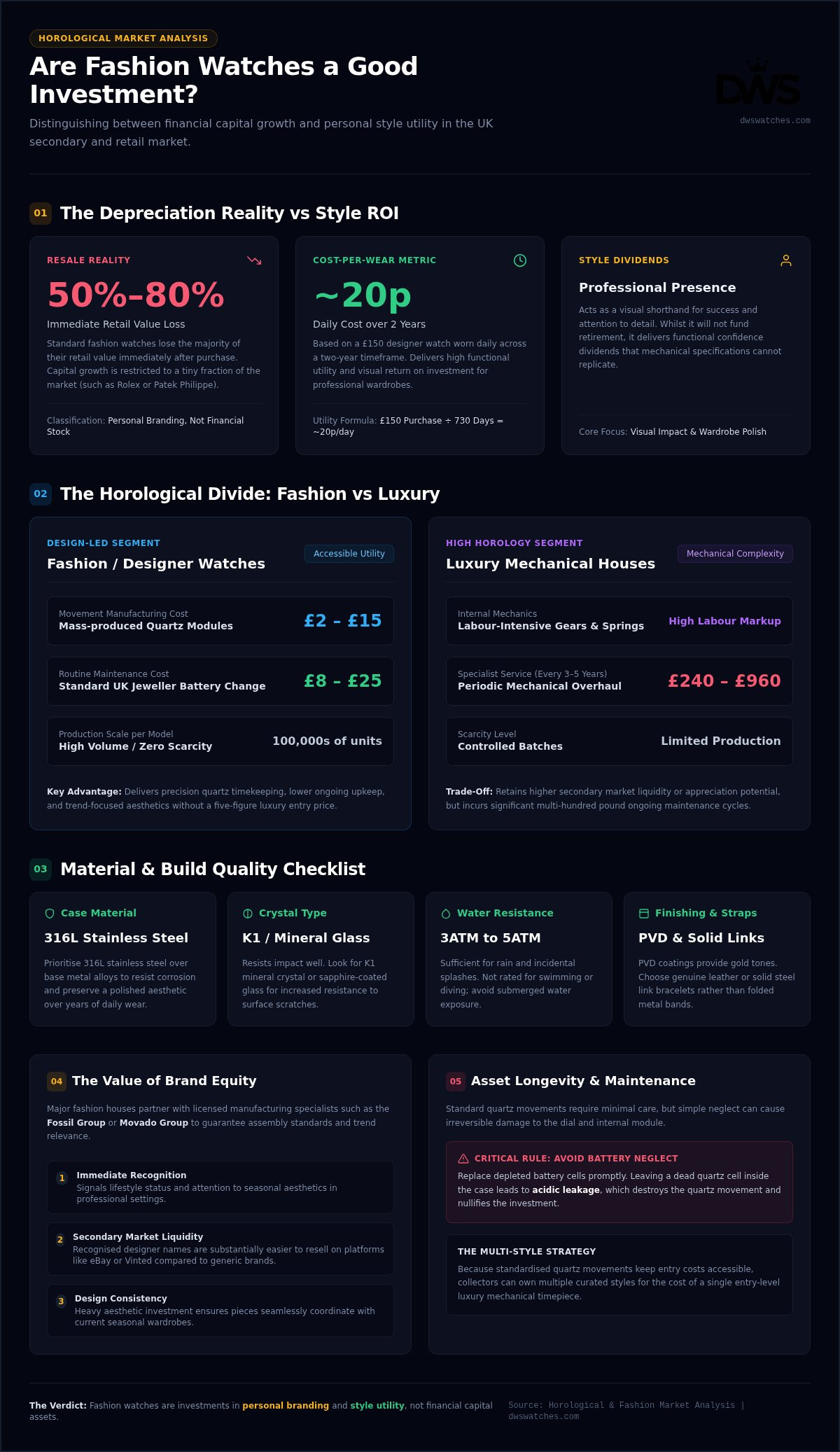
Standard fashion watches lose 50% to 80% of their retail price the moment they leave the store. If you seek capital growth, these aren't the vehicles for it. Only a tiny fraction of the market, dominated by names like Patek Philippe and Rolex, sees prices rise above retail. Many UK consumers ask: are fashion watches a good investment? The answer lies in distinguishing between financial appreciation and aesthetic dividends. You aren't buying a financial stock; you're buying a tool for personal branding.
When evaluating if are fashion watches a good investment for your lifestyle, use the cost-per-wear metric. A £150 designer watch worn daily for two years costs roughly 20p per day. This utility represents a tangible return. A curated look acts as a professional investment, offering a composed presence that generic alternatives lack. UK professionals often use accessories to signal attention to detail. A designer watch acts as a visual shorthand for success. Whilst it won't fund your retirement, it can facilitate the meetings that do.
Financial Appreciation vs. Style Utility
Fashion watches lack the scarcity required for financial appreciation. Most use mass-produced quartz movements that cost between £2 and £15 to manufacture. Consequently, they don't appreciate in value on the secondary market. The 'Style ROI' is where the value lives. A recognised designer piece completes a professional wardrobe. It provides a psychological boost. You feel prepared. You look the part. This confidence is a functional dividend that mechanical specifications cannot replicate.
The Role of Brand Equity
Brand recognition drives perceived value. A timepiece from a major fashion house carries weight amongst UK collectors and professionals. These brands often rely on licensing agreements with specialists like the Fossil Group or Movado Group to ensure quality and trend relevance. Choosing a curated designer piece ensures your accessory matches your ambition. Key benefits include:
- Immediate Recognition: Designer labels signal a specific lifestyle and status.
- Design Consistency: Fashion houses invest heavily in aesthetics that complement current seasonal trends.
- Market Liquidity: Whilst they depreciate, recognised brands are easier to sell on secondary platforms like eBay or Vinted compared to 'no-name' brands.
Focus on the visual impact. A well-chosen watch from a trusted designer label maintains its 'favourite' status in your collection through consistent utility. This reliability is the true measure of a successful purchase.
The Horological Divide: Fashion vs. Luxury Investments
Understanding the gap between mass-market production and high-horology maisons is essential. Production scale determines rarity. Fashion houses typically produce hundreds of thousands of units per model. This high volume ensures accessibility but eliminates scarcity. If you ask are fashion watches a good investment for financial resale, the answer remains negative because rarity is non-existent. However, for those seeking curated designer watches at a lower entry point, these pieces offer immediate aesthetic value without a five-figure price tag. You pay for the design and the brand name, not the mechanical complexity.
Movement and Internal Mechanics
Quartz movements power most designer pieces. These modules rely on a battery and a vibrating quartz crystal. They are accurate and reliable. Maintenance is simple. A battery change typically costs between £8 and £25 at a standard UK jeweller. In contrast, mechanical watches use complex gears and springs. They command higher prices due to labour-intensive assembly. However, they require specialist servicing every three to five years, often costing between £240 and £960. In the context of 2026 designer trends, horology represents the intersection of precision timekeeping and brand-led aesthetic innovation. For the budget-conscious shopper, quartz offers superior daily utility and lower long-term costs.
Build Quality and Longevity
Materials define longevity. Most quality fashion watches use 316L stainless steel. This alloy resists corrosion and maintains a polished finish. PVD (Physical Vapour Deposition) coating provides colour, such as gold or rose-gold tones. Whilst PVD is durable, it can wear off over years of heavy use. Most fashion-tier pieces feature mineral crystal. This glass resists impact but scratches more easily than the sapphire crystal found on luxury models. Water resistance in this category is often limited. Most designer pieces carry a 3ATM or 5ATM rating. These levels protect against rain and splashes but are not suitable for swimming or diving. Focus on these specifications to ensure your choice lasts:
- Case Material: Prioritise 316L stainless steel over base metal alloys.
- Crystal Type: Seek K1 mineral glass or sapphire-coated mineral for better scratch resistance.
- Strap Quality: Look for genuine leather or solid link steel bracelets rather than folded metal.
Designer watches prioritise visual impact and seasonal relevance. They use standardised components to keep prices accessible. This approach allows you to own multiple styles for the price of one luxury timepiece. Evaluate the build quality against your intended use. A well-constructed fashion watch provides years of service if you follow basic maintenance protocols. Avoid battery neglect. Change the cell as soon as it dies to prevent acidic leakage. This simple step preserves the movement and your investment in style.
Maximising Your Style ROI: Which Brands Hold Appeal?
Selection determines longevity. You must identify houses that maintain consistent design languages. If you wonder are fashion watches a good investment, look at the brand's history of stability. Brands with established collections offer predictable aesthetic updates. This consistency ensures your piece remains relevant across multiple seasons. Maximising ROI requires a shift in perspective. You aren't buying for the next owner. You're buying for your future self. Focus on utility. Select for longevity. The market rewards clarity.
The Power of Minimalism
Minimalism serves as a hedge against shifting trends. Clean dials and uncluttered indices ensure a watch transitions from professional environments to social settings without friction. Over-designed pieces date quickly. Large logos and excessive complications often fall out of favour within eighteen months. A minimalist designer piece offers the highest style ROI. It remains a staple in your rotation long after seasonal fads fade. This versatility reduces the need for frequent replacements. It simplifies your morning routine. A single, well-chosen minimalist watch can replace three trend-heavy alternatives.
Tracking Designer Brand Trajectory
Research the house's horological direction before purchasing. Some brands treat watches as a temporary accessory. Others invest in distinct design codes that span decades. Check for long-term licensing partnerships with established manufacturers. These partnerships provide stability. They ensure that basic maintenance remains possible years after the model is discontinued. Review our list of the best value designer watch brands uk to identify established performers with proven track records.
Spotting a future classic requires observing the balance between current hype and historical design cues. Limited collaborations often create temporary demand but rarely sustain long-term interest. For sustained value, choose core collection pieces that reflect the brand's primary identity. Consistency signals a reliable purchase. Avoid brands that pivot their entire aesthetic every season. When considering if are fashion watches a good investment for your wardrobe, prioritise brands that value their own heritage. A watch that looks good today should look equally relevant in five years. This is the essence of a curated collection.
Protecting Your Asset: Maintenance for Longevity
Maintenance preserves the functional life of your timepiece. Whilst are fashion watches a good investment in financial terms remains a complex question, their aesthetic longevity depends entirely on your care. Neglect leads to irreversible damage. PVD coatings and mineral crystals require specific handling. Follow a disciplined routine to maintain the professional appearance of your collection. A well-maintained watch retains more value and provides a higher style ROI over time. Consistency in care is the mark of a serious collector.
Daily Care and Cleaning
Use a dry microfibre cloth for daily wiping. This removes oils and dust without abrasive action. Avoid chemical cleaners on PVD or gold-plated surfaces. These agents can strip the finish over time. For stainless steel bracelets, use a soft-bristled brush and mild soapy water to remove grime from the links. Ensure the crown is fully pushed in before cleaning. Leather straps require different care. Keep them dry. Use a dedicated leather conditioner every six months to prevent cracking and odour. The ideal storage environment for a quartz watch is a cool, dry, and dark space away from magnetic fields and extreme temperature fluctuations.
Preserving the Full Set
Keep the original box and paperwork. Even for designer pieces, the 'full set' is vital in the UK second-hand market. Original packaging accounts for a 10% to 20% value spread compared to watch-only listings on platforms like eBay or Vinted. It proves authenticity. It suggests the owner cared for the item. Organise your collection in a dedicated watch box with soft cushions. This prevents scratches and keeps components together. Avoid storing watches in bathrooms or damp areas. High humidity can breach seals and fog the crystal.
Battery health is critical. Never leave a dead battery inside the case for more than a few weeks. Expired silver-oxide cells can leak acid. This corrosion destroys the circuit board and gearing. If the watch stops, replace the battery immediately. A standard replacement at a UK jeweller costs between £8 and £25. This is a small price to pay for movement safety. View our collection of designer watches to find pieces that balance durability with high-end aesthetics. Maintenance ensures your purchase continues to deliver its aesthetic dividend. Professional directness in care leads to better long-term results. Protect your style. Maintain your standards.
Strategic Purchasing: Why Discounted Curation Wins
Strategic purchasing mitigates the financial impact of immediate depreciation. Ask: are fashion watches a good investment? The answer depends on your entry price. Buying at full recommended retail price (RRP) ensures a significant loss. Standard fashion watches drop 50% to 80% in value upon purchase. However, acquiring these same pieces at discounted rates offsets this decline. This approach secures a better entry point for your style collection. You gain brand prestige without the primary retail hit. Focus on the value floor. Eliminate the markup. Maximise your style ROI from the start.
The Economics of Discounted Luxury
The initial RRP drop represents the largest hurdle for fashion watch value. Strategic buying requires timing. Align your purchase with curated discount cycles. Curation platforms frequently price designer watches at 30% to 60% below MSRP. This margin provides a financial buffer. It brings the purchase price closer to the true secondary market value. By selecting affordable designer watches UK, collectors build a diverse rotation whilst preserving capital. Procurement at this level is a calculated move. It acknowledges market reality. It treats the watch as a lifestyle consumable with a controlled cost. Efficiency in procurement leads to better long-term satisfaction. Don't pay for showroom overheads.
The Online Curation Advantage
Online curation offers distinct benefits over traditional high-street showrooms. Physical showrooms carry high overheads. Staffing costs are significant. These expenses inflate consumer markups. A digital storefront operates with leaner margins. This efficiency allows for more competitive pricing. Variety is another advantage. A curated digital space isn't limited by shelf dimensions. You see more styles. You access more brands in one location. Transparency is the hallmark of modern watch retailing. Online specifications are clear. Pricing is visible. Comparisons are immediate.
Designer Watch Store UK organises value for the British consumer. Our focus remains on national UK coverage and e-commerce efficiency. We act as a professional gatekeeper for affordable luxury. We provide the status of a designer label without traditional retail friction. The process is direct. The value is clear. Your collection grows through smart acquisition rather than speculative spending. Focus on the curated experience. Trust the specialist. Build your collection with confidence.
Curating Your Professional Style ROI
Success in watch collecting requires a shift from financial speculation to aesthetic utility. You now understand that are fashion watches a good investment primarily when viewed through the lens of personal branding. A designer timepiece signals attention to detail and professional composure. By bypassing high-street markups and focusing on discounted curation, you offset the steepest phase of depreciation. Diligent maintenance and preserving the full set ensure your collection remains a functional asset for years to come. Don't settle for inflated retail prices when building your rotation.
Designer Watch Store UK specialises in discounted designer timepieces for the modern professional. We provide national UK delivery on all orders from our curated selection. Trust the expertise of a focused specialist to elevate your wardrobe. Access premium labels with transparent pricing and modern efficiency. The right choice is waiting. Explore our curated collection of designer watches and secure a timepiece that reflects your standards today.
Frequently Asked Questions
Do fashion watches hold their value over time?
Fashion watches typically don't hold their monetary value over time. Most models lose between 50% and 80% of their retail price immediately after purchase. When considering if are fashion watches a good investment, you must evaluate the aesthetic utility rather than financial gain. These pieces serve as lifestyle consumables. They provide a high style ROI through daily wear and professional branding. Focus on purchasing at discounted rates to minimise the impact of this initial depreciation.
Which fashion watch brands are considered the best quality?
Quality in the fashion sector is defined by manufacturing partnerships. Brands licensed by the Fossil Group or Movado Group, such as Emporio Armani or Coach, offer consistent build standards. These manufacturers use reliable Japanese or Swiss quartz movements. Look for 316L stainless steel cases and genuine leather straps to ensure longevity. A curated selection from established fashion houses provides better functional value than unbranded alternatives. Prioritise brands with a clear horological direction and stable design codes.
Is it better to buy a quartz or mechanical watch for an investment?
Mechanical watches are generally superior for capital preservation, whilst quartz watches excel in convenience and low maintenance. Mechanical timepieces command higher secondary market prices due to their complexity. However, they require specialist servicing that can cost hundreds of pounds every few years. Quartz movements are more accurate and significantly cheaper to maintain. If your goal is a versatile, style-focused collection without high upkeep costs, quartz is the practical choice for most UK professionals.
Can I resell a designer watch in the UK?
You can resell designer watches in the UK through various secondary platforms. Sites like eBay, Vinted, and Depop are popular for fashion-tier timepieces. Whilst you won't recover the full retail price, recognised brand names attract more interest than generic brands. Ensure the watch is clean and functional before listing. Providing clear photographs and a detailed description helps secure a faster sale. The UK market values transparency and verified authenticity in all designer transactions.
Does the original box really matter for a fashion watch?
The original box and paperwork are essential for maintaining the resale potential of a fashion watch. In the UK secondary market, a 'full set' often commands a 10% to 20% price premium over watch-only listings. These items act as proof of authenticity and signal that the owner has cared for the piece. Store your packaging in a dry environment to prevent damage. Keeping the original set is a simple way to protect your style investment.
Are expensive watches always a better investment than fashion ones?
Expensive luxury watches aren't always a better investment than fashion pieces. Whilst elite brands like Rolex may appreciate, most luxury watches lose 20% to 50% of their value in the first year. Fashion watches have a much lower entry cost, making the total financial risk smaller. If you buy a discounted designer piece, the total loss is capped. Evaluate your purchase based on cost-per-wear rather than speculative financial outcomes to ensure satisfaction.
How often should I change the battery in my fashion watch?
Change the battery in your fashion watch every 18 to 24 months. Most quartz movements rely on silver-oxide cells that have a limited lifespan. You must replace the battery immediately once the watch stops. Leaving a dead battery inside the case leads to chemical leakage and acidic corrosion. This damage often renders the movement unrepairable. Standard battery replacements at independent UK jewellers are affordable and protect the internal mechanics of your timepiece.
What is the difference between a designer watch and a luxury watch?
The primary difference lies in the focus of production. Designer watches prioritise aesthetic trends and brand recognition, often using outsourced quartz movements. Luxury watches focus on horological heritage, in-house mechanical calibres, and hand-finished components. Whilst designer pieces offer accessible style, luxury models are built for multi-generational longevity. Understanding this divide helps you decide if are fashion watches a good investment for your specific needs. Choose designer pieces for contemporary flair and luxury for mechanical tradition.