


Could the most recognisable name on a watch dial be the least useful reason to buy it? A search for a branded watches brand can lead you to familiar labels, but the name alone won’t tell you whether a particular watch suits your routine, feels comfortable or has the details you value. Product listings can make those differences harder to compare.
It’s reasonable to want a watch with a considered design from a recognised brand. Before setting your budget, look beyond reputation. Compare appearance with practical details such as the movement, materials, case size and strap, and think about where and how often you plan to wear it.
This guide gives you a practical way to compare branded watches. You’ll learn what a brand can suggest, which product details matter for daily use and how to weigh design against value. Use the same checklist to explore discounted designer watches and choose a timepiece that fits your style and budget.
What does a branded watch say about its design and purpose?
A branded watch is a timepiece presented under an identifiable maker’s name or fashion label. The brand may suggest a design approach, intended audience and market position, but it can’t tell you whether every watch bearing that name is right for you. Treat the name as a starting point, then assess the individual model.
A search for a “branded watches brand” may bring familiar names to the top of the results. Look beyond recognition to see what each watch offers. A label associated with fashion accessories may put emphasis on styling, whilst another maker may focus more on traditional watchmaking or everyday designs. These associations can help you narrow your options, but they don’t replace checking the product details.
Which parts of a watch contribute to its brand identity?
A brand’s visual identity comes from the way its design elements work together. Look at the case shape, dial layout, colour palette and strap. A clean dial with minimal markings gives a different impression from one with several sub-dials; a leather strap creates a different look from a metal bracelet. Repeated design choices across a range can make a label easier to recognise.
A brand’s product focus also influences what shoppers associate with it. A range of formal-looking watches may suggest styles for occasions, whilst a broader fashion range may include designs intended to move between work and everyday wear. These are clues about appearance and purpose, not guarantees of performance. A distinctive case or dial doesn’t establish the quality of the materials, movement or construction.
Does a familiar watch brand automatically mean better quality?
No. A recognisable name doesn’t confirm the quality or suitability of a particular model. Compare its materials, movement information and intended use. A polished appearance may suit your style, but it won’t show whether the watch’s features work for your daily routine.
The movement is one detail worth understanding. Mechanical watches use a system of components to keep time, while other watches use different movement types. For a deeper explanation, see Understanding Mechanical Watch Movements. Use that knowledge to interpret the listing, then consider movement alongside design and materials rather than treating any one feature as decisive.
No single brand leads in every category. Compare watches on the same terms: how they look, what they’re made from, how they work and where you plan to wear them. This gives you a clearer basis for choosing a designer watch for its fit and value, rather than just the name on the dial.
How do watch brands differ in style, movement and daily use?
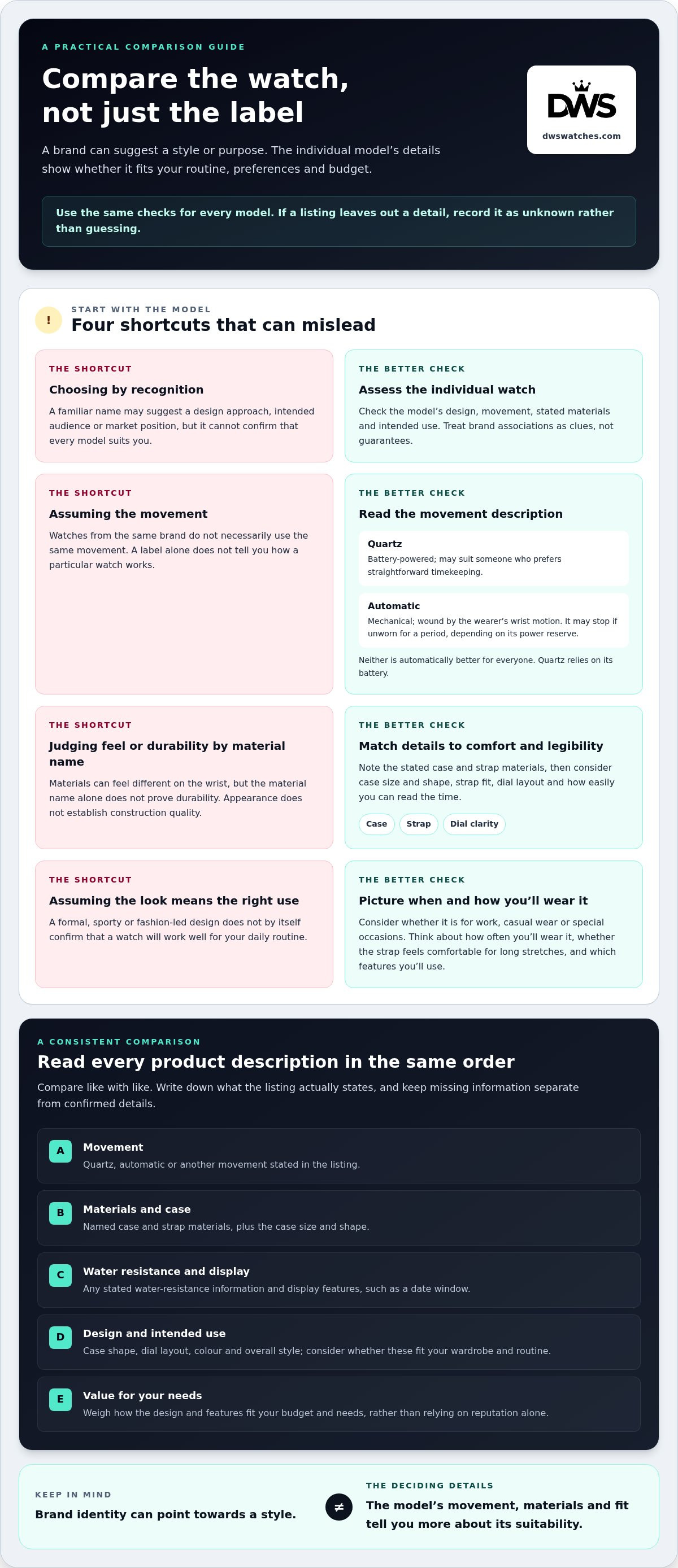
Compare the watch itself, not just the label. A useful comparison covers four things: design, intended wearer, movement and stated materials. A design might be formal, sporty or fashion-led, but its everyday practicality depends on the specific model. Check whether the dial is easy to read, the case size looks comfortable for you and the features suit how you plan to wear it.
When making a branded watches brand comparison, read each product description in the same way. Note the movement, case and strap materials, dial layout and functions you’ll use. A brand identity can suggest a style direction, but it doesn’t tell you exactly what’s inside a particular model. Casio and Fossil, for example, are familiar names in the wider market, but you still need to check the movement and materials of each individual watch.
What is the difference between quartz and automatic watch brands?
Quartz watches use a battery-powered movement to keep time. Automatic watches use a mechanical movement that is wound by the wearer’s motion as the wrist moves. Quartz may suit someone who prefers a straightforward timekeeping option; automatic may appeal to someone interested in mechanical construction. Neither is automatically better for everyone. For more context, read Exploring Watch Movements and Complications. Check the product description to confirm the movement of the watch you’re considering.
The movement can affect your routine. An automatic watch may stop if it isn’t worn for a period, depending on its power reserve, whilst a quartz watch relies on its battery. Consider how often you’ll wear the watch and whether you want to engage with its mechanics or prefer a simpler routine. Don’t assume that every watch from the same brand uses the same movement.
How do materials and design affect the way a watch feels?
Check the case and strap materials stated in the product description. Stainless steel, leather and other materials can feel different on the wrist, but the material name alone doesn’t prove durability. Case size and shape also influence comfort and how the watch sits beneath a sleeve. A high-contrast dial may be easier to read at a glance, whilst smaller or more detailed markings can change both the look and legibility.
Match these details to your day-to-day use. If you’ll wear a watch for long stretches, consider how the strap feels and fits. If you need to read the time quickly, prioritise a clear dial. Explore the designer watches available online with these criteria in mind, and compare each listing rather than relying on brand recognition alone.
How to compare branded watches without choosing on reputation alone
Use the same criteria for every watch you’re considering. This stops a familiar name becoming a shortcut for judging a product and makes differences easier to spot. Record what each listing actually says. If a detail isn’t included, note that you don’t have the information rather than guessing.
| Design | Movement | Materials | Intended use | Value |
|---|---|---|---|---|
| Case shape, dial layout, colour and overall style | Quartz, automatic or another stated movement | Named case and strap materials | Work, casual wear or special occasions | How the design and features fit your budget and needs |
Which details are worth comparing between watch brands?
Read each product description in the same order. Start with the movement, then note the case and strap materials, any stated water-resistance information and display features such as a date window. Consider whether the design fits your wardrobe and routine. A formal-looking watch may suit work or occasions, whilst a relaxed design may be easier to wear day to day.
Compare like with like wherever possible. If a feature is described clearly for one watch but not mentioned for another, that doesn’t prove the second watch lacks it. It means the listing doesn’t give you that information, so don’t treat an assumption as fact. This makes a branded watches brand comparison more useful than relying on names or search filters alone.
How should shoppers judge value in a branded watch?
Set your budget before browsing. Then consider whether each watch’s design, stated features and likely use make sense within it. A lower price isn’t automatically better value if the watch doesn’t suit your needs; a higher price doesn’t establish quality by itself. Judge each product against the things that matter to you.
Reviews can add context about a wearer’s experience, but they’re only one part of your decision. Read them alongside the product details and your own priorities. Look for comments about fit, legibility or everyday use, and remember that another person’s preferences may differ from yours. Don’t treat reviews or brand reputation as a guarantee of quality, longevity or future resale value.
For another way to assess design and features against budget, read our best value designer watch brands guide. Use its perspective alongside your comparison notes to decide which watch offers the right balance for you.
How to choose a branded watch that fits your routine
Start with how you’ll wear the watch, not the name on the dial. A short list of practical needs makes it easier to compare options and keep brand preference within your budget. Use this process before you browse.
- Set the main purpose. Decide whether the watch is for everyday wear, work, a special occasion or a gift. Think about where you’ll wear it and how often. A watch for regular use may need to work with several outfits, whilst one for an occasion can follow a more specific style.
- Choose a realistic budget. Set your spending limit before looking at brands. This gives you a clear boundary and helps prevent recognition alone from shaping your decision. Decide which design details and features matter most within that limit.
- Define your preferred look and feel. Consider dial colour and layout, case shape and size, and strap style. Use your wardrobe and comfort preferences as a guide. A watch can look appealing in a product image but still feel too large, formal or visually busy for your routine.
- Write down essential requirements. List the movement you prefer, the materials you want to consider and any practical details that matter for your intended use. Separate essentials from nice-to-haves. This keeps a branded watches brand search focused on what suits you, rather than on a long list of familiar labels.
- Compare the product listings. Check each watch’s stated movement, materials, case dimensions, strap details and relevant features. Use the same checklist for every option. If an essential detail is missing, don’t assume what it is; leave that watch off your shortlist until you can compare it fairly.
- Review the shortlist in context. Picture wearing each watch through a normal day. Consider whether it suits your clothes, planned activities and comfort preferences. Remove options that miss a key requirement, then compare the remaining watches on design, features and fit with your budget.
This order keeps the decision grounded in your needs. A brand can help you find a style direction, but the specific watch should meet your requirements. For more value-focused guidance, read our affordable designer watches UK buying guide.
Ready to put your shortlist into practice? Browse designer watches online and compare the details that matter to your routine.
Explore branded watches with a clearer view of value
A considered choice starts with your priorities. Match the watch’s design to your style, its purpose to your routine and its stated features to what you need. Brand recognition can help you identify a design direction, but the individual product details show whether a particular watch fits your expectations and budget.
What to keep in mind when browsing the store
Designer Watch Store UK is an online retailer of discounted designer watches from popular fashion brands, serving customers across the United Kingdom. As you browse, use the shortlist you’ve already built. Focus first on the styles and practical features that matter to you, then compare the information provided for each watch.
Don’t assume every watch from a familiar label shares the same movement, materials or feel. Details can vary between individual watches, even when they carry the same name. Read each listing on its own terms. Use the information provided to decide whether the design suits your intended use and the features make sense within your budget.
If you began by searching for a branded watches brand, keep the name in perspective as you compare. A recognisable label may catch your attention, but your final choice should reflect the watch you’ll wear: its appearance, comfort, stated specifications and suitability for your routine. Make room for personal preference, too. The right balance is the one that makes sense for you.
Take the next step towards a considered choice
Browse at your own pace. Revisit your priorities as you compare the designer watches available, and focus on the product details that support your decision. You don’t need to choose on reputation alone.
Browse discounted designer watches and find a style that fits your routine and budget.
Choose your next watch with confidence
A recognised name can help you identify a style, but the right choice depends on how the individual watch fits your routine. Compare its design, movement and stated materials, then consider comfort, intended use and your budget. A consistent checklist makes it easier to assess each option without relying on reputation alone.
Keep your priorities in view as you browse. Whether you arrived through a search for a branded watches brand or already have a particular look in mind, focus on the details that matter to you. Product descriptions help you compare watches on their own merits, rather than assuming every design from a familiar label is the same.
Designer Watch Store UK offers an online selection of discounted designer watches from popular fashion brands to customers across the United Kingdom. Take your time and compare the available product information against your shortlist.
Browse discounted designer watches and find a timepiece that fits your style, routine and budget.
Frequently Asked Questions
What is a branded watch?
A branded watch is a timepiece sold under an identifiable maker’s name or fashion label. The name can suggest a design style, intended wearer or product position, but it doesn’t tell you everything about the watch. Check the individual listing for details such as movement, materials, case size and functions. These specifics help you decide whether that particular watch suits your preferences and how you plan to wear it.
Is a designer watch the same as a luxury watch?
Not necessarily. “Designer watch” often describes a timepiece associated with a fashion label or design-led brand, whilst “luxury watch” commonly signals a higher-end market position. The terms can overlap, but they aren’t interchangeable measures of quality. Compare the design, movement, materials and stated features of the individual watch. Consider how it fits your style and budget rather than relying on either label to define its value.
Can a watch brand tell you whether a watch is good quality?
A brand name alone can’t confirm the quality of a specific watch. It may indicate a familiar design identity, but product details vary across a brand’s range. Review the stated movement, case and strap materials, and relevant features in the listing. Customer reviews can offer additional context, though they reflect individual experiences. Use them alongside the specifications and your own needs, not as a guarantee of quality or longevity.
How do I choose a watch brand that suits me?
Start with your routine, preferred style and budget, then compare brands and individual watches against those priorities. Decide whether you need a watch for everyday wear, work, an occasion or a gift. Consider dial legibility, case size, strap style and movement. If you’re searching for a “branded watches brand”, use the name as a starting point, then judge each watch by its stated details and fit for your life.
How much should I spend on a branded watch?
Choose a budget that feels comfortable for you before browsing. There’s no single amount that suits every shopper, and a higher price doesn’t automatically mean better value. Consider whether the watch’s design, stated features and likely use justify the amount you’re willing to spend. Designer Watch Store UK offers discounted designer watches from popular fashion brands, so compare each product’s details and displayed price with your priorities.
What should I check before buying a branded watch online?
Read the product description carefully. Check the movement, case and strap materials, case dimensions, dial features and any stated water-resistance information. Make sure the style and fit suit how you intend to wear the watch. Review the product images alongside the written details, and read the retailer’s delivery and returns information before ordering. If an important specification isn’t included in the listing, don’t assume what it is.
Are branded watches a good gift?
A branded watch can make a thoughtful gift if its style and practical details suit the recipient. Consider what they usually wear, whether they prefer a simple or detailed dial, and which strap styles they find comfortable. If you’re unsure of their preferences, a versatile design may be easier to wear across different settings. Check the product details and choose within a budget that feels right for the occasion.