


The most recognisable name isn’t always the right watch for you. The best choice among guy watch brands depends on how a watch looks with your clothes and fits into your day, not just what the name says about it.
Brand lists can make the differences hard to see. One watch may look formal and understated; another may feel sporty or bold. Unfamiliar terms and features you won’t use can make a straightforward choice seem complicated. You don’t need to spend more than you’re comfortable with to find a style that feels right.
This guide explains how to compare men’s watch brands by design, purpose and everyday wear. You’ll learn what to look for, from dial layout and case shape to strap and movement, and how to use those details to build a manageable shortlist. With a clearer idea of what suits you, you can browse designer watches more confidently.
Guy Watch Brands: Start with the Style You Want to Wear
A list of guy watch brands is difficult to use until you know what you want a watch to look like. Brand names can signal different design priorities, but they can’t tell you whether a particular watch will suit your clothes or routine.
A men’s watch brand is a maker or label with recognisable design choices across its products. Some favour understated dials and simple cases; others lean towards sporty details, formal profiles or bolder designs. Treat these as visual cues, not rules. You can explore how watch design has changed in this overview of the History of watches, then focus on styles that feel relevant to you.
Personal style is a useful first filter because it narrows the field before brand names and features complicate the choice. Start with a look you’d be happy to wear often, then compare brands whose designs fit it.
Which watch styles fit different wardrobes?
Assess the dial, markers, case and strap together. Minimalist designs keep the face restrained, with clean markers and little extra detail. Dress-led watches often have a neat, refined appearance that pairs naturally with tailoring and more formal occasions. Sport-inspired designs use a more casual visual language, making them an easy match for everyday clothing and active routines.
- Minimalist: suits simple outfits and a preference for low-key accessories.
- Dress-led: complements shirts, jackets and occasions that call for a more polished look.
- Sport-inspired: works well with relaxed clothing and an active, on-the-go routine.
Statement-making designs sit at the bolder end of the scale. A prominent face, strong colour contrast or striking dial detail can draw attention. Decide whether you want your watch to blend in or become a focal point, then use that preference to narrow your options.
What should a watch say about your personal style?
Choose a direction before comparing individual labels. Do you prefer subtle accessories, classic shapes, technical-looking details or expressive design? Your existing habits offer useful clues. Notice the colours you wear most, whether you already choose metal jewellery and which occasions fill a typical week.
- Subtle: favour neutral clothing and accessories that don’t dominate an outfit.
- Classic: reach for familiar shapes and polished details that work across settings.
- Technical or expressive: enjoy visible design features, contrast or a stronger presence on the wrist.
Think about how often and where you’ll wear the watch. One chosen mainly for office clothing may call for a different look from one intended for weekends. If your wardrobe moves between both, a versatile design may be a better starting point. A recognisable name can help you create a shortlist, but it can’t replace a design you genuinely enjoy wearing.
Once you’ve identified your preferred look, browse designer watches with those cues in mind. Keep your shortlist focused on styles that suit your wardrobe and everyday life.
How Men’s Watch Brands Express Identity Through Design
A watch brand’s identity is the pattern of visual choices that makes its designs recognisable. One label might favour clean faces and restrained colours; another may use bold cases, detailed dials or digital displays. Reputation can attract attention, but design offers a more practical way to compare guy watch brands and decide which ones suit your taste.
A watch becomes recognisable through repeated design cues: the dial, case, colour and strap work together to create a consistent identity. Look at each element separately, then consider the overall effect on the wrist. A familiar name matters less if the design doesn’t appeal to you.
Which design details make a men’s watch distinctive?
Start with the dial. A clean face with simple markers is easy to read at a glance and has a calm appearance. Chronograph subdials are smaller displays set within the main dial, often giving it a more technical, information-rich look. A prominent bezel, the ring around the dial, can make a watch appear more substantial. Digital displays have a distinct, modern feel.
Next, consider proportions and materials. A broad case or thick-looking profile makes a stronger impression than a slim, compact shape. A metal bracelet often looks structured, whilst leather can appear more formal or classic. Fabric and rubber straps tend to feel casual or sporty. Colour also affects how easily a watch works with different outfits: a neutral dial may be more adaptable, while a bright accent draws attention.
Casio, G-Shock and Tissot are familiar names in the watch market, but a brand name alone doesn’t describe every design in a range. Compare the watch itself. Is the dial clear? Does the case look balanced on your wrist? Does the strap suit the clothes you wear most?
How do watch movements affect the choice?
The movement is the mechanism that keeps the watch running. Quartz watches use a battery-powered electronic movement. Automatic watches use a mechanical movement that winds itself through the wearer’s wrist movement. These options offer different ownership experiences, so consider which better fits your preference for a straightforward time display or a mechanical design.
Movement type is separate from appearance. Two watches can look similar but use different movements, and a brand’s image won’t tell you which experience you’ll prefer. Check the product details, then weigh movement alongside readability, case shape and strap comfort. You don’t need to learn every technical term. Focus on the distinctions that affect how you want to wear the watch.
Use this quick comparison before building a shortlist:
- Dial: clean, detailed or digital?
- Shape: slim and discreet, or prominent?
- Strap: metal, leather, fabric or rubber?
- Movement: battery-powered quartz or automatic?
Once those preferences are clear, browse designer watches by style and compare the details rather than choosing on recognition alone.
Compare Guy Watch Brands by Purpose, Design and Everyday Feel
Brand comparisons are more useful when you focus on what a watch is designed to look and feel like, rather than searching for a universal winner. The table below compares broad watch categories. It isn’t an exhaustive assessment of any brand, and a single label may offer designs across several categories.
| Watch category | Design character | Typical format | Wardrobe fit | Practical appeal |
|---|---|---|---|---|
| Classic or dress-led | Restrained, polished and easy to read | Analogue dial; quartz or automatic | Tailoring, smart-casual outfits and formal occasions | Offers a composed look without a strong visual statement |
| Sport-inspired | More prominent details, often with a bold bezel | Analogue dial; sometimes a chronograph | Casual clothing and relaxed settings | Appeals if you prefer a substantial, active-looking design |
| Digital | Direct, functional display with a contemporary feel | Digital screen, commonly quartz-powered | Everyday and casual wardrobes | Makes the time easy to read in a glanceable format |
| Technical or chronograph | More dial detail and a purposeful appearance | Analogue dial with subdials, or digital display | Casual outfits or looks that welcome extra detail | Can appeal for its design, even if you won’t use every function |
These categories organise your options; they don’t set rules. The right comparison depends on your routine, preferred level of visual detail and how you want a watch to sit alongside your clothes.
Should you choose a fashion-led, heritage or technical look?
Fashion-led designs respond more visibly to current styling, while a more enduring approach tends to rely on familiar shapes and restrained details. Heritage-inspired cues may reference earlier watch designs, but that look alone doesn’t prove anything about craftsmanship or performance. Technical details, such as a chronograph layout, can simply be part of the aesthetic. Choose them because you enjoy the appearance, not because you feel you must use every feature.
How do classic, sporty and digital watches differ?
A classic analogue design can complement smarter clothing and formal occasions. Sport-inspired watches often have a stronger presence, which may suit casual clothes better. Digital formats, including designs associated with Casio and G-Shock, have a distinct display and practical visual character. Seiko and Tissot are recognisable names across the wider watch market, but their ranges shouldn’t be reduced to one style. These are broad associations, not an exhaustive brand assessment.
Use the table to narrow your options, then browse designer watches by style with your preferred format and wardrobe in mind. This gives you a clearer basis for comparing guy watch brands without relying on reputation alone.
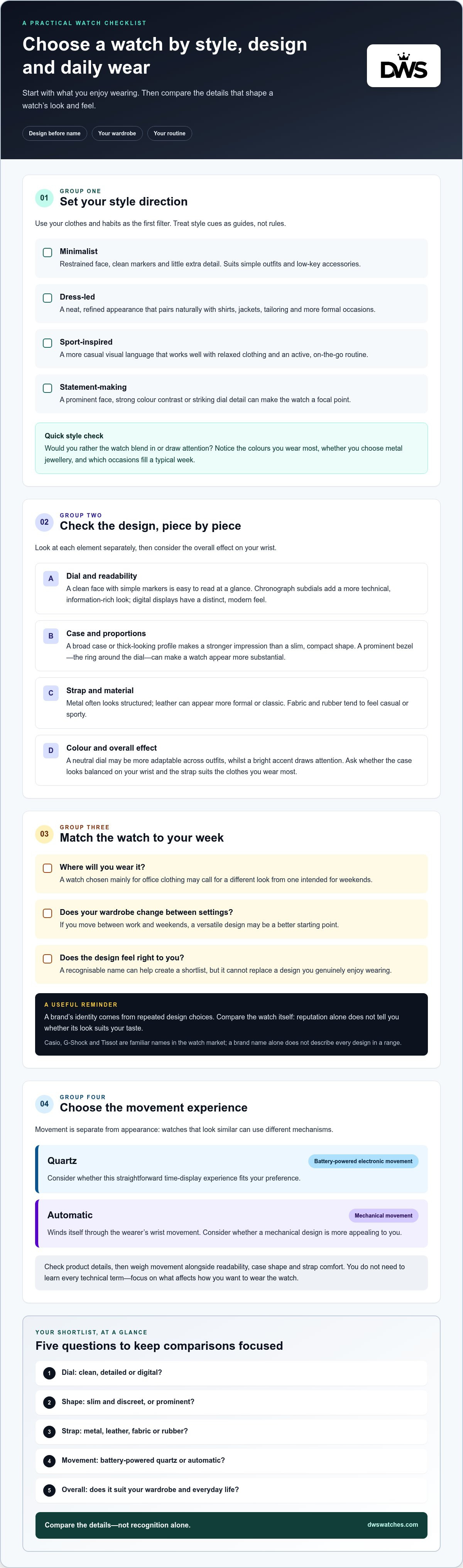
Use This Shortlist to Find a Men’s Watch Brand That Fits You
A clear process makes a long list of guy watch brands easier to manage. Start with how and where you’ll wear a watch. Then set your style and practical preferences before comparing a small number of brands. This keeps reputation, advertising and extra features from distracting you from what matters.
- Start with use. Note your usual clothing, common occasions and whether the watch is for work, weekends or both. A watch for daily wear may need to work across more outfits than one chosen for occasional formal events.
- Set your visual direction. Decide whether you prefer a quiet dial, a classic analogue look, technical details or a stronger statement. Think about how much visual detail you enjoy seeing on your wrist.
- Choose practical preferences. Set your preferred display, strap feel and case presence. Decide which features are essential and which are simply appealing extras.
- Compare a small shortlist. Select two or three brands whose designs meet your basic needs. Use the same criteria for each, then review the product specifications before making a final choice.
Which practical details should you decide first?
Keep the essentials short. You might prefer a digital display that’s quick to read, an analogue face, a comfortable strap for regular wear or a less prominent case. Your everyday setting matters too: consider whether the watch needs to suit office clothing, casual outfits or a mix of occasions. Check stated specifications for details such as movement, dimensions and materials. Treat optional functions as a bonus, not a requirement, unless you know you’ll use them.
How can you narrow a long brand list?
Remove labels whose overall design language doesn’t fit the preferences you’ve written down. Compare the remaining options side by side, using the same questions for each. As a final sense-check, picture each design with outfits you already wear, rather than an imagined wardrobe. If one option only suits a rare occasion, consider whether that matches your purpose.
Use this simple grid to compare your finalists. Fill it in with details from the watch descriptions, not assumptions about a brand’s reputation.
| Criteria | Brand A | Brand B | Brand C |
|---|---|---|---|
| Design that suits my taste | ___ | ___ | ___ |
| Fits my usual clothing and occasions | ___ | ___ | ___ |
| Display, strap and case preferences | ___ | ___ | ___ |
| Essential specifications met | ___ | ___ | ___ |
Choose the shortlisted brand whose design and stated features fit your real routine, not the one with the loudest reputation. Once you’ve completed the grid, browse designer watches with your preferences in mind and compare suitable options at your own pace.
Explore Designer Watch Brands with a Clearer Point of View
You now have a practical way to compare watches: start with your preferred style, consider where you’ll wear one, then check the design details and specifications that matter to you. Use those points as your final filter. A familiar brand name may help you find a design direction, but the watch itself still needs to suit your taste and routine.
Choosing by brand identity has a clear advantage. A label’s recurring design choices can help you recognise the look you’re drawn to, whether understated, classic or more technical. The trade-off is that a brand name can’t tell you how a particular watch will feel, whether its proportions suit your wrist or whether you’ll enjoy wearing it regularly. Designs can vary within one brand, so assess each watch individually.
What are the advantages and limits of choosing by brand?
Use a brand as a starting point, not a verdict. Its design identity can help you reduce a broad search to a few relevant options. Then compare individual watches on their own merits. Look at the dial, case shape, strap, display and stated specifications. This keeps recognition in perspective and helps you judge whether the actual design fits your preferences.
How should you move from research to browsing?
Turn your shortlist into simple browsing filters. Keep your preferred style in view, decide whether you want an analogue or digital format, and prioritise the setting where you expect to wear the watch most. If you’ve set essential preferences, such as a particular strap feel or a restrained design, use them to rule out options that don’t match. Browse a focused selection rather than opening every brand category at once.
As you compare, return to the clothes and occasions you noted earlier. Does the watch work with what you already wear? Does its visual detail feel right for an ordinary day, not just a special event? Check the product information for details that matter to you, and set aside options that miss an essential preference. You don’t need a perfect score across every feature. The aim is to find a considered fit, not to collect specifications.
Designer Watch Store UK is an online destination for exploring affordable designer watches across the UK. With your criteria in place, browse the designer watch selection and compare styles at your own pace. Let your shortlist guide you, then choose a design you’ll be glad to wear.
Make Your Next Watch Choice with Confidence
A watch can become part of your everyday routine, so give the final choice room to feel personal. The right pick among guy watch brands isn’t necessarily the most familiar one. It’s a design you’re happy to wear, in a format that fits your life and a style that feels like yours.
Keep your shortlist close as you browse. Compare the actual watches, check the details that matter to you and notice which options work with the clothes you already own. Designer Watch Store UK offers an online selection of value-focused designer watches for customers across the United Kingdom, giving you a place to explore once your preferences are clear.
Explore the designer watch selection and take the next step towards a watch that feels right for you.
Frequently Asked Questions
What are the best watch brands for men?
The best brand is the one whose watches match your preferences and intended use, rather than the one with the highest profile. Decide what you want the watch to do in your wardrobe, then compare specific designs from brands that fit. For example, someone looking for a clear, no-fuss everyday display may prioritise different details from someone choosing a watch mainly for occasional events.
How do I choose a watch brand that suits my style?
Match the design to details you already enjoy wearing. Note whether your clothes are mostly neutral or colourful, whether you favour polished or matte accessories, and how noticeable you want a watch to be. The phrase guy watch brands can bring up a broad range of options, so use those preferences to narrow your search. Save a few likely choices, then compare them with outfits you wear often.
Are fashion watch brands worth considering?
Yes, fashion watch brands are worth considering if you like the designs and the stated details meet your needs. A fashion focus doesn’t automatically make a watch unsuitable, just as a heritage image doesn’t guarantee it’s right for you. Look closely at the materials and movement information provided, along with the seller’s terms. Judge the watch in front of you, not assumptions based on its label.
What is the difference between quartz and automatic watches?
A quartz watch runs using a battery-powered electronic movement; an automatic watch has a mechanical movement that winds through wrist movement. That affects how you interact with it. If you wear a watch only now and then, consider whether you prefer a battery-powered option or are happy for an automatic watch to stop when it isn’t being worn. Check the individual watch details for its stated movement.
Can I wear a sporty watch with smart clothes?
Yes. Choose a sport-inspired design with a relatively restrained dial and colours that sit comfortably with your outfit. For example, a dark watch can work with a plain shirt and smart-casual jacket if its case doesn’t overpower the rest of the look. For a formal event with a strict dress code, a simpler watch may feel more in keeping. Let the occasion guide the level of contrast.
Are Seiko, Casio and Tissot good men’s watch brands?
They’re recognised names, but “good” depends on the particular watch and what you want from it. Casio is associated with digital watches, while Seiko and Tissot offer varied designs across their ranges. Compare the specific model’s appearance, stated movement and other listed details rather than assuming every watch from one label shares the same qualities. Your preferred design and intended use remain useful guides.
What should I look for when comparing men’s watch brands online?
Compare the product information, not just the brand name or main photograph. Look for stated case dimensions, strap material, movement and display type, then check whether the images show the dial and side profile clearly. Read the seller’s delivery, returns and warranty terms before ordering. If a detail matters to you but isn’t clear in the listing, don’t assume it is a feature.