


A watch can match every colour in an outfit and still feel out of place. The best way to learn how to match your watch to your outfit is to start with the occasion, not the palette. A formal setting usually calls for a cleaner, slimmer design; everyday clothes can take a sportier or more detailed watch. If you’ve hesitated over a strap that seems too casual, or wondered whether silver and gold can sit together, you’re not alone. The aim isn’t to make every accessory identical. It’s to create a considered connection.
This guide offers a simple method: match the watch’s formality to your clothes, coordinate its strap or metal finish with one or two details, then check that its size feels balanced on your wrist. You’ll see how to adapt the approach for work, casual outfits and smarter occasions, including when contrast works better than an exact match. These checks can help you choose confidently and make a versatile designer watch work across more of your wardrobe.
Match Your Watch to Your Outfit: Start with the Occasion
Matching a watch to an outfit is a matter of balancing occasion, formality and visual detail. The watch should feel at home with what you’re wearing, adding a considered finishing touch rather than taking over the look. Start with the event and the outfit as a whole. Dress conventions are useful guidance, not strict rules: personal style, the setting and your other accessories all affect the final choice.
A well-matched watch suits the occasion, feels proportionate with the outfit and echoes one detail without copying every colour.
What does it mean for a watch to suit an outfit?
A cohesive combination brings together compatible formality, scale and visual details. A slim watch can sit neatly alongside a simple shirt or tailored jacket; a larger, more detailed design may feel more natural with relaxed layers. Neither is automatically better. The goal is for the watch to look deliberate beside your clothes, rather than noticeably out of step.
Coordination doesn’t mean exact colour matching. A neutral outfit can work with a watch that adds restrained contrast, while a coloured dial can pick up a small detail elsewhere. Treat the watch as one part of the overall balance, not something that must match every belt, shoe or accessory.
Why occasion and dress code matter
The occasion gives you a useful starting point. A workplace, a relaxed weekend plan and a black-tie event call for different levels of formality, but none dictates one exact watch. For a quick overview of how expectations vary, see this guide to understanding dress codes. Then consider the clothes you’ll actually wear and choose a watch that fits their level of formality.
- Everyday: With jeans, knitwear or casual shirts, a robust-looking or more detailed watch can feel in proportion. Keep the combination comfortable and intentional.
- Smart-casual: For chinos, a neat blouse or a relaxed jacket, choose a design with enough polish for the occasion without making the outfit feel overly formal.
- Formal: With a suit or eveningwear, a clean, understated watch is usually the more discreet choice. At a black-tie event, avoid a bulky design that draws attention. If you wear a watch, let it sit quietly with the outfit.
Use these descriptions as a filter, not a checklist. A creative workplace may welcome more contrast than a traditional event, and a smart-casual outfit can shift depending on its cut, fabric and finish. If you’re unsure how to match your watch to your outfit, ask whether the watch’s visual weight and level of detail feel right for the setting. This check narrows your options before you consider colours or accessories.
The result should look composed, not overly arranged. A watch can complete an outfit through its shape, finish or formality, even when its colour differs from the rest. Start with the occasion, then choose one detail to connect the pieces. That leaves room for individual style while keeping the combination balanced.
Match Watch Style and Formality to the Clothes You Wear
Once you’ve considered the occasion, look at the clothes themselves. A watch’s formality comes from more than its label: dial detail, strap material, case finish and visual weight all shape how it looks. A simple dial and slim profile tend to feel understated, while a larger face, bold markings or substantial bracelet draw more attention. These are useful signals, not fixed rules.
The more formal the outfit, the more restrained the watch’s overall visual character should usually be.
Choose a watch for casual, smart-casual and formal outfits
Think of formality as a spectrum. At the relaxed end, uncomplicated styling feels at ease with weekend clothes. Smart-casual sits in the middle, where you can add polish or a distinctive detail. Formal dress generally benefits from a cleaner, less prominent design. The same watch can work across different settings if its shape and finish stay in balance with each outfit.
Compare business-casual clothing with relaxed denim. Tailored trousers, a fine knit or a structured jacket have a neater finish, so a refined bracelet or understated leather strap can complement their sharper lines. Jeans, a soft shirt and casual layers have a looser feel; a straightforward watch with a practical-looking strap can suit them without appearing too dressy.
- Relaxed clothing: Choose an easy-to-read dial and a simple strap or bracelet. Let comfort and unfussy design lead.
- Smart-casual clothing: Use a polished finish or subtle dial detail to lift the outfit, while keeping the watch in proportion with its clean lines.
- Formal clothing: Favour a discreet face and a neat profile that sits comfortably with a shirt cuff or evening sleeve.
For black tie or another formal dress code, restraint is a sound starting point. A busy dial or pronounced sporty features may interrupt the clean line of eveningwear. That doesn’t mean every formal outfit needs the same classic design. Consider the event’s expectations and the way your clothes are cut.
Balance watch size and visual weight
Scale affects the whole look. A prominent watch can compete with a patterned shirt, textured jacket or statement sleeve, while a very small, delicate design may seem lost beside heavier fabrics or broad cuffs. Judge the watch against your wrist, sleeve and outfit together. It should sit within the wrist’s outline and, ideally, slide beneath a cuff without forcing the fabric out of shape.
Use a quick visual check: if the watch is the first thing you notice, decide whether that emphasis is intentional. If not, try a quieter dial or a less substantial strap. To compare different designs, explore designer watches in different styles and consider which could work across your wardrobe.
Coordinate Watch Colours, Straps and Metals Without Overmatching
Once the watch’s style feels right, use colour and material to connect it with the rest of your outfit. You don’t need every accessory to match. One repeated detail, such as a warm brown tone or cool metal finish, can make the combination feel considered. The shades can differ; aim for harmony rather than an exact copy.
Use this quick comparison as a starting point. The outfit still determines whether each option feels right.
Leather strap: A polished, classic direction. Use shoes or a belt as colour references, but related shades work just as well as exact matches.
Metal bracelet: A clean, versatile finish. Stainless steel can echo silver-toned details such as a buckle or ring without matching every piece.
Fabric strap: A relaxed choice. It can pick up a colour from knitwear, a jacket or a small pattern detail for an easy connection.
Coordinate leather straps with shoes and belts
Shoes and belts are useful guides, not a matching test. If you’re wearing brown shoes and a brown belt, a brown leather strap can bring the outfit together. The tones don’t need to be identical: a lighter strap can sit comfortably with darker shoes if another warm detail, such as a bag or jacket, carries that colour through.
Black accessories offer a similarly clear reference. A black strap can reinforce a black belt or shoes, especially with a streamlined outfit. But a brown strap isn’t automatically wrong beside black. It can work as a deliberate contrast if the rest of the look feels balanced and the strap isn’t the only unrelated warm tone. Check the full outfit in natural light, as colours can look different indoors.
Pair metal and fabric straps with outfit details
Stainless steel can sit naturally alongside other understated metal accessories. A silver-toned buckle, ring or cufflink gives it a quiet point of connection. Gold- and silver-toned pieces can also be worn together. Make the mix look intentional by repeating each tone, for example, a gold-toned watch with a silver ring and another subtle gold detail. A single unmatched metal can look accidental; repeating the combination makes it look like a choice.
Fabric straps make colour coordination more flexible. With relaxed clothing, a muted fabric strap can echo a colour in a checked shirt or knit without competing with the pattern. Choose one shade to repeat and let the rest of the outfit provide contrast. That is often enough to match your watch to your outfit without making every accessory identical.
Use the same approach when comparing designer watches in different styles. Look for a strap or metal finish that gives you more than one useful pairing, rather than choosing a watch solely to match a single outfit.
Use This Simple Method to Match a Watch to Any Outfit
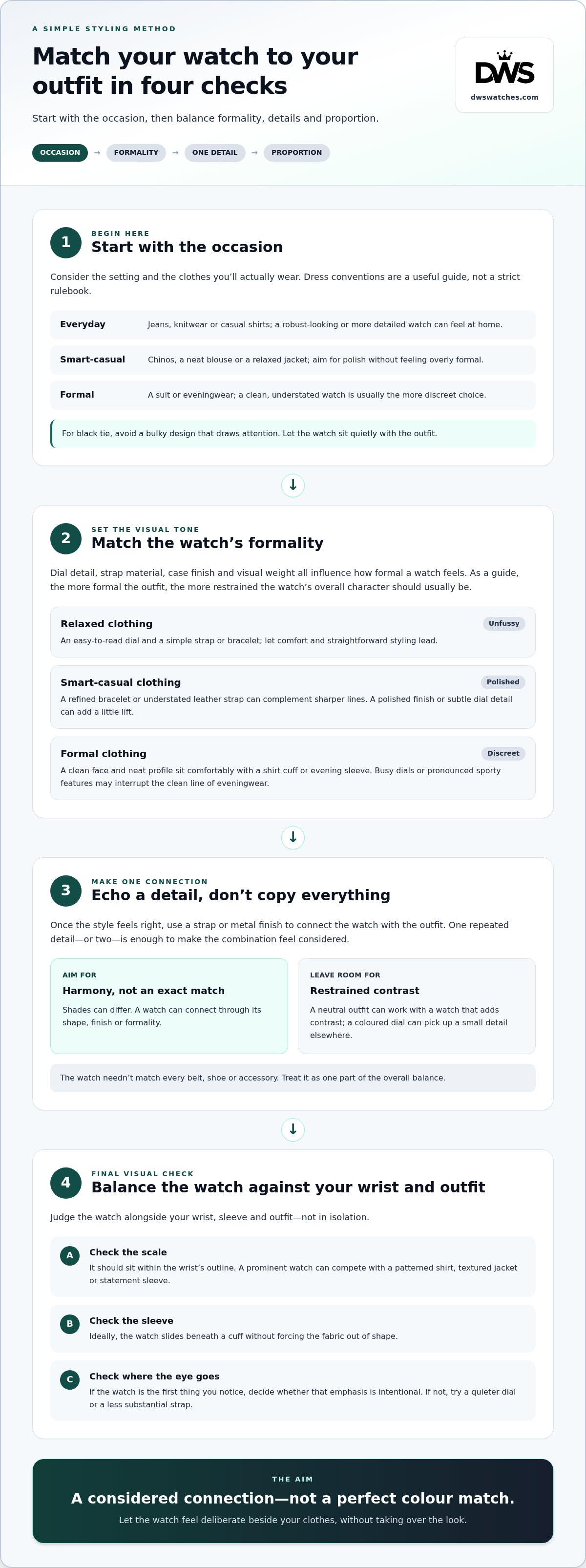
A reliable choice doesn’t need a long list of rules. Use this four-step check as you get dressed. Start with the clothes you’ve chosen, then narrow down your watch by formality, visual weight and one connecting detail. Finish with comfort: a watch that looks right but catches on your sleeve won’t feel right for the day.
Follow a four-step outfit-first check
- Identify the occasion and outfit. Decide whether the setting is relaxed, smart-casual or formal. Then assess the clothes themselves: soft layers and denim read differently from tailored pieces, even if both suit the same event.
- Choose compatible visual weight. Look at the watch’s dial, case and strap together. A simple outfit can accommodate a more noticeable design, while patterned fabric, bold cuffs or detailed tailoring may call for a quieter one. Aim for balance rather than a precise match to a particular clothing style.
- Echo one colour or material. Pick a single reference point, such as the warm tone of a leather belt, the cool finish of a buckle or a colour in a knit. Repeat that detail in the watch if it feels natural. Related tones are enough; every accessory doesn’t need to be identical.
- Check the complete look. Put the watch on, adjust your sleeve and look in the mirror. Make sure the watch sits comfortably, doesn’t distort the cuff and doesn’t draw more attention than you want. Keep it if the outfit feels balanced and you can move freely.
Adjust the choice for layers and personal style
Layers can change how a watch looks and feels. Try it with the shirt, jumper or jacket you’ll actually wear, rather than judging it with your sleeve pushed up. The watch should sit securely on your wrist and move beneath the cuff without snagging or bunching the fabric. If your sleeve naturally reveals the watch, check that the combination still looks deliberate.
Let clothing details guide how restrained the watch should be. A patterned shirt, textured jacket or statement cuff already adds visual interest, so a simpler watch can give the outfit room to breathe. With plain, pared-back clothes, a distinctive dial or strap can become the point of interest. Neither approach is a rule; it’s a way to decide where the eye goes.
Choose in this order: occasion, outfit, watch presence, one connecting detail, then comfort and personal preference. That sequence makes it easier to match your watch to your outfit without turning styling into a rigid formula. Your preference is the final test. If the watch feels comfortable and the full look feels like you, keep it in the rotation.
Use this method to compare designer watches in different styles and find a design that works with the clothes you wear most.
Build a Versatile Watch Wardrobe Around Your Outfits
Before adding another watch, take stock of the clothes you already wear. Think about a typical week: how often do you choose tailored outfits, relaxed layers or eveningwear? Notice which colours appear regularly, and whether you usually wear leather shoes, trainers or metal accessories. This quick wardrobe check can show whether your current watch covers most occasions or whether another style would fill a genuine gap.
Look for repeated needs rather than one-off outfits. If most of your clothes are casual, a watch that works with everyday layers may be more useful than one chosen for a rare formal event. If your routine moves between work and social occasions, consider which watch details can carry across both. The aim is to make getting dressed easier, not to build a collection for its own sake.
Decide whether one watch or a small rotation suits you
One versatile watch keeps the choice simple. It can suit a range of outfits if its overall design works with the clothes you wear most. A small rotation offers more flexibility: you could choose a quieter design for formal settings and a more relaxed option for everyday wear. Neither approach is essential. Base the decision on your routine, dress codes and wardrobe, not on a fixed number of watches.
If you’re weighing up your options, use the affordable designer watches UK buying guide to consider what to look for before choosing. The best value designer watch brands UK guide can also help you compare brand options. Designer Watch Store UK offers affordable designer watches from popular fashion brands, with different styles to consider for your wardrobe.
Choose a versatile designer watch for your wardrobe
Start with the details you reach for most. A neutral wardrobe may work well with a simple dial and a strap or bracelet that sits comfortably beside your usual accessories. If you often wear warm colours or brown leather, consider whether a related strap tone would pair with several outfits. If you dress formally regularly, prioritise a watch that feels at ease beneath a cuff; if you mostly wear casual clothes, look for a style that doesn’t feel too delicate beside everyday fabrics.
Think in combinations. Picture the watch with several outfits you already own, across the occasions you dress for most. If it only works with one specific look, it may be less versatile than another option. If it suits several combinations without demanding exact colour matches, it can earn a regular place in your rotation. That’s a practical way to apply the principles of matching a watch to your outfit when deciding what your wardrobe needs.
Choose for the clothes you wear, the occasions you attend and the style you want to express. Explore designer watches that suit your wardrobe.
Make Your Next Watch Choice Work Harder
Use your next outfit as a chance to notice what you reach for most. A watch that earns regular wear should feel natural with your routine, not just look right in one carefully planned combination. Keep comfort and your own preferences in view. Style works best when it feels like yours.
Learning how to match your watch to your outfit helps you make a confident choice without treating coordination as a set of strict rules. If you spot a gap in your wardrobe, consider a design that complements the clothes and occasions you return to most.
Designer Watch Store UK offers affordable designer timepieces from popular fashion brands through its online store for customers across the United Kingdom. Explore designer watches and find a style that feels right for your wardrobe.
Frequently Asked Questions
Should your watch match your outfit exactly?
No. Exact matching can make an outfit feel overly coordinated. Instead, choose one point of connection and let the rest vary. A navy outfit might work with a silver watch, while a small warm-toned detail in the dial or strap adds contrast. Check the full look in daylight. If the watch feels deliberate rather than copied from another accessory, you’ve found a balanced way to match it to your outfit.
Can you wear a metal watch with a suit?
Yes. A metal watch can work well with a suit, particularly for daytime business wear or a less traditional event. Choose a neat bracelet and a dial that doesn’t dominate the jacket, then check that the watch slides under your shirt cuff without catching. For a very formal evening dress code, a quieter design can preserve the suit’s clean line. The cut of the suit and the occasion both matter.
How do you match a watch strap to shoes?
Use your shoes as a reference, not a colour swatch. With dark brown shoes, a medium or deep brown strap usually sits comfortably; with black shoes, a black strap creates a quieter line. With casual shoes, you have more freedom to choose a fabric strap or metal bracelet. Consider your belt too, then judge the combination alongside your trousers and jacket.
What watch should you wear with jeans?
Choose a watch that suits the rest of the outfit, not the denim alone. A metal bracelet can work with a crisp shirt and dark jeans; a fabric strap feels at home with trainers, a T-shirt and an overshirt. If your jeans are part of a smart-casual look, avoid a watch that feels much dressier than your shoes and top. Comfort matters for everyday wear.
Can you wear a brown watch strap with black shoes?
Yes. A brown strap can work with black shoes, especially if the outfit includes another warm note, such as a tan knit or brown bag. Keep the contrast intentional and avoid adding several competing leather colours. If the outfit is very formal or otherwise monochrome, a black strap may create a cleaner finish. Brown isn’t automatically a mismatch, so consider the whole combination.
How many watches do you need to match different outfits?
There’s no required number. One watch can suit a varied wardrobe if it works for your most common settings and clothes. A second may be useful if you regularly move between very different dress codes, such as practical weekend wear and formal events. Before adding another, note which outfits your current watch doesn’t suit comfortably. Fill that specific gap rather than buying for combinations you rarely wear.